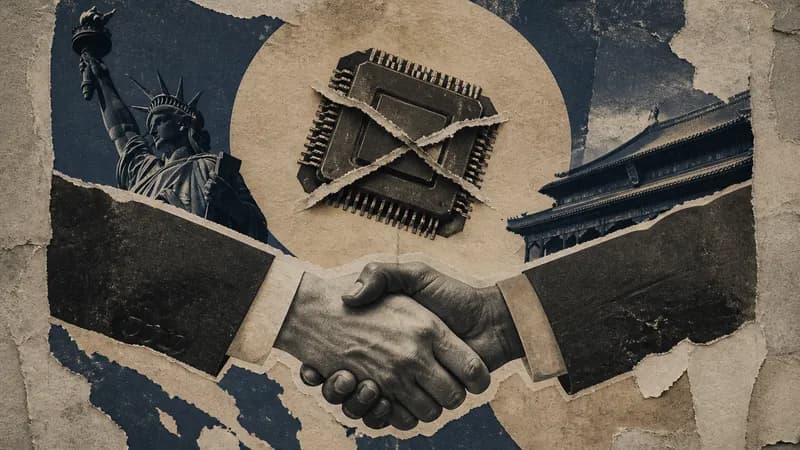
U.S. Trade Representative Jamieson Greer told Bloomberg TV on Friday that export controls on semiconductor chips were not a major topic of discussions with Chinese officials in Beijing.
The comments suggest a breakthrough on selling Nvidia's advanced H200 chips to China remains far away, despite Nvidia CEO Jensen Huang's last-minute invitation to President Donald Trump's Beijing trip.
"This was not a major topic of discussion at the bilateral meeting. We did not talk about chip export controls at the meeting," Greer said, adding that 15 to 17 U.S. CEOs at the meeting discussed their companies' issues.
Reuters reported that the U.S. cleared around 10 Chinese companies to buy H200s, including Alibaba, Tencent and ByteDance, but no deliveries have been made. The Trump administration approved H200 exports in December and added conditions in January.
Greer noted allowing H200 imports would be a "sovereign decision" for China. "They're fluid. It depends on threats, commercial availability, and what China can already do," he said.
"You want a balance between national security, protecting high tech, and benefiting from overseas markets. Those factors went into the H200 decision."
While Chinese AI firms like DeepSeek tout reliance on domestic chips, U.S. curbs choke Beijing's self-sufficiency push as local fabs struggle to scale output.
Computing power shortages have forced many Chinese AI models to ration user access. Policymakers worry about deepening dependency on U.S. chips as a supply chain vulnerability.
Hawkish U.S. lawmakers and former Biden officials argue selling advanced AI chips to China would allow them to catch up in frontier AI and advance military ambitions.
"They're making their own determinations. They're committed to domestic production. They often see U.S. high tech as a threat to their own growth," Greer said.