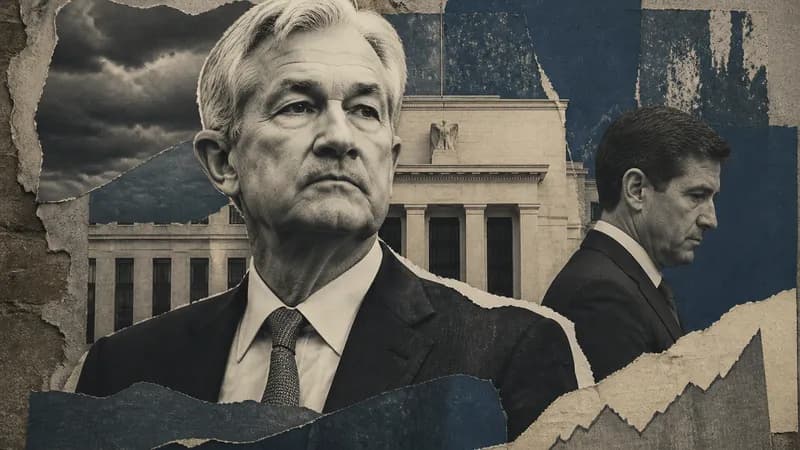
The Federal Reserve Board announced late Friday that it has appointed Jerome Powell as chair pro tempore, ensuring he will lead the U.S. central bank on an interim basis until his successor, Kevin Warsh, is formally sworn into office.
According to a Reuters report, the move ensures continuity at the helm of global monetary policy, even as deep ideological fractures and unprecedented legal friction erupt within the central bank's governing body.
Powell's second four-year term as Fed Chair formally expired on Friday, concluding an eight-year run defined by aggressive post-pandemic tightening and persistent defenses of the institution's political independence.
While incoming Fed Chair Kevin Warsh is expected to be sworn in soon by U.S. President Donald Trump, the White House has yet to announce an official date, creating a temporary leadership vacuum that required the Board's pro tempore designation.
The board's vote to keep Powell temporarily in place was not unanimous, exposing growing internal discord regarding the central bank's leadership trajectory.
Fed Governors Stephen Miran and Michelle Bowman issued a rare joint public statement confirming they voted against the measure because it does not include a fixed time period for his temporary status.
The public pushback underscores mounting pressure from politically aligned factions eager to accelerate the transition to Warsh's leadership.
While Powell is officially stepping down from the chairmanship, he is executing a highly unusual strategy by refusing to vacate his separate seat on the Fed's Board of Governors, which runs until January 2028.
Powell has explicitly stated he will maintain his governor seat until he is fully satisfied that the Trump administration has completely terminated its active criminal investigation into him.
The standoff injects considerable regulatory and institutional uncertainty into the market, as an entrenched Powell on the board could create a powerful counterweight to Warsh's growth-oriented policy agenda.