


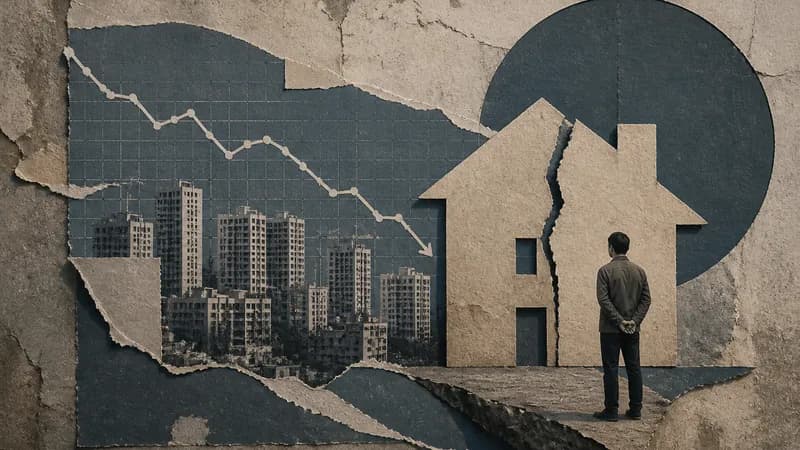
BEIJING - China's new home prices fell at their slowest monthly pace in a year in April, offering tentative signs of stabilization. However, the recovery remains uneven despite local government efforts to boost sales and shore up fragile sentiment.
Analysts said the property market is likely to struggle to find a bottom for several more months, even if prices in major cities begin to stabilize.
"The property market has not yet bottomed out," said Morningstar analyst Jeff Zhang. "Sector indicators are likely to remain weak in the coming months, although sales and prices in higher-tier cities could stabilize."
New home prices dipped 0.1% in April from the previous month, narrowing from a 0.2% drop in March. This marks the slowest decline since April last year.
On an annual basis, prices fell 3.5%, compared with a 3.4% decline in March, marking the steepest drop in 11 months.
The smaller pace of monthly decline, largely due to firmer prices in major cities, bolsters hopes among investors and homeowners for a rebound in the property sector, which at its peak accounted for around 25% of the economy.
"The April data suggest we are closer to a bottom in the property market, though we've had a couple of false bottoms in the past as well. A stabilization in prices is a much-needed first step toward a recovery, as inventories remain high," said Lynn Song, chief economist for Greater China at ING.
MARKET IN SEGMENTED RECOVERY
Major cities have seen improved prices and transactions but smaller cities are still grappling with a backlog of unsold homes and unfinished projects.
New home prices in tier-one cities, including Shenzhen and Shanghai, rose 0.1% month-on-month, while prices in tier-two and tier-three cities fell 0.1% and 0.3%, respectively.
The number of cities reporting monthly price declines fell to 49 from 54 in March.
Property-related stocks fell in morning trade, underscoring weak sentiment. Broader economic pressures have also weighed on Chinese economic activity, with retail sales rising just 0.2% in April.
Property investment fell 13.7% in the first four months compared with the same period last year, steeper than an 11.2% drop in the first quarter.
Divergence among cities is likely to persist, said Zhang Dawei, an analyst at Centaline Property. "Homebuyers should take a rational view of market divergence and choose the timing and location of purchases based on their own needs and a city's development potential."
In the existing home market, prices in tier-one cities rose month-on-month but were still down from a year earlier, while smaller cities recorded declines on both a monthly and annual basis.
Household loans, including mortgages, contracted by 786.9 billion yuan in April after a 490.9 billion yuan rise in March, suggesting that property demand remains weak.
Following the central government's renewed push for limiting new projects and reducing housing inventory, a number of Chinese cities rolled out incentives, such as subsidies, for home buyers.
Some cities also stepped up calls for state-backed entities to buy unsold housing units and offer them as affordable housing. Whether such measures can lead to a sustained recovery remains unclear, analysts say.


