


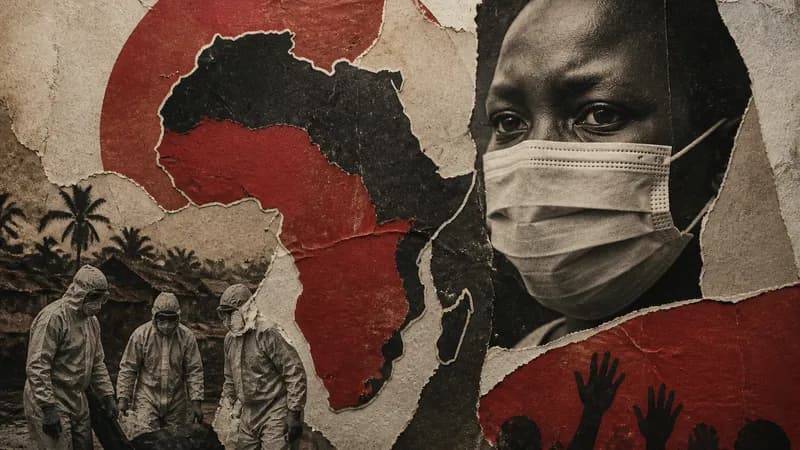
The World Health Organization (WHO) has declared the Ebola outbreak in Uganda and the Democratic Republic of Congo (DRC) an international public health emergency.
Uncertainty surrounds the geographical spread and actual number of infections.
In three regions of the DRC, 80 deaths and 246 suspected cases have been reported, with 8 laboratory-confirmed.
In Kampala, Uganda, two cases from the DRC were confirmed, one fatal.
The epicenter is in the Ituri province of the DRC, specifically Rwampara and Mongbwalu districts.
The first infected person was a nurse in Bunia who died. She had the Bundibugyo strain, which is considered less deadly than other strains.
There is no vaccine for the Bundibugyo strain.
Ebola is transmitted from wild animals. Early symptoms include muscle and headache, fever, sore throat. Later stages involve liver and kidney dysfunction, and bleeding.
The first human case was recorded in 1976 in the DRC. The largest outbreak occurred in West Africa from 2014-2016, killing over 11,000 people.


