


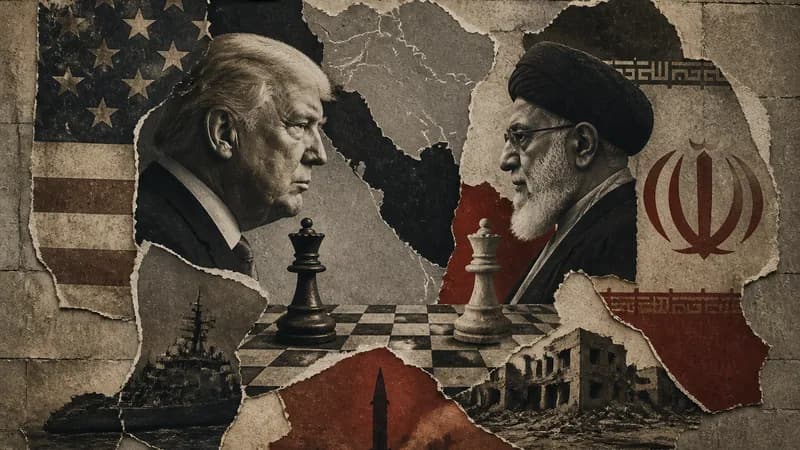
Three months after US-Israeli strikes on Iran, a US blockade and Tehran's grip on the Strait of Hormuz have created a deadlock.
Neither side is bending, economic pain is deepening, and the risk of renewed war is rising.
Policymakers fear a miscalculation by Washington or Tehran could trigger fresh conflict.
Calls for new strikes are growing in the US and Israel. Some officials argue more pressure could force Iran to negotiate.
But former Israeli intelligence officer Danny Citrinowicz says: "We have already tested this theory repeatedly, and Iran did not capitulate."
Iranian officials say concessions on missiles, nuclear capabilities, or Hormuz are ideological pillars. Giving them up is surrender, not compromise.
Indirect talks mediated by Pakistan have brought no breakthrough. Gaps remain vast.
The US wants Iran to halt uranium enrichment for 20 years. Iran wants security guarantees, war reparations, and recognition of its sovereignty over Hormuz.
President Trump warned Tehran: "The clock is ticking. Better get moving, FAST, or there won't be anything left."
Analysts say both sides believe time is on their side, making a deal impossible.
The near-closure of the Strait of Hormuz disrupts global oil supplies. Economic fallout is growing.
Iran sees its enriched uranium stockpile and control of Hormuz as core strategic assets essential for survival.
Iranian sources say Tehran seeks a preliminary deal: reopening Hormuz under Iranian oversight in exchange for lifting the blockade.
On nuclear issues, Iran could dilute 440 kg of highly enriched uranium or send it to Russia. The US refuses.
Analyst Aaron David Miller says: "There is no military solution to Hormuz. Talks are the only viable path."
Citrinowicz warns: "Overestimating pressure and underestimating Tehran's resilience is dangerous."


