


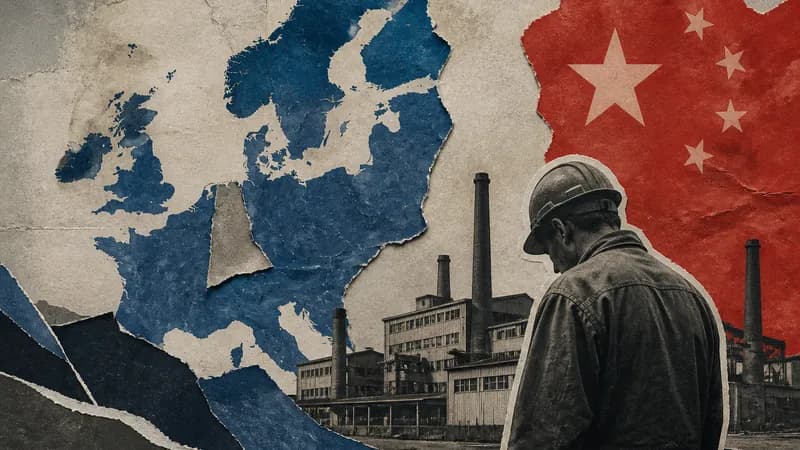
Cheap goods from China are putting European industry in a difficult position. As layoffs and factory closures increase, the European Union (EU) leadership is drawing up urgent plans to prevent a “Second China Shock.”
Rising dependence on China within the EU has caused concern in the industrial sector. Europe's economy, overly reliant on China for raw materials, intermediate parts, and key components, faces the risk of another “China Shock.”
Experts say the current situation resembles the economic crisis triggered by China's WTO accession 25 years ago, but on a larger scale. The main threat to European manufacturers is not just cheap electric cars, but the components and intermediate products that form the backbone of industry.
Europe's dependence on China has reached record levels in sensitive areas from chemical raw materials to machine parts, pharmaceuticals to plastics. China's state subsidies and low exchange rate policy allow products to be sold 30-50% cheaper in the European market, pushing local companies toward Chinese suppliers.
Fear of mass unemployment is growing, particularly in Germany's automotive and engineering sectors. Industry representatives warn that if the situation continues, many factories in Europe could close. The European Commission is working on new rules requiring companies to source strategic components from at least three different suppliers.
New industrial laws like “Made in EU” are under discussion, but their adoption could take years. Experts believe that if the trade imbalance persists, the problem may go beyond economics, posing a security risk in critical areas like technology, automotive, pharmaceuticals, and energy.


