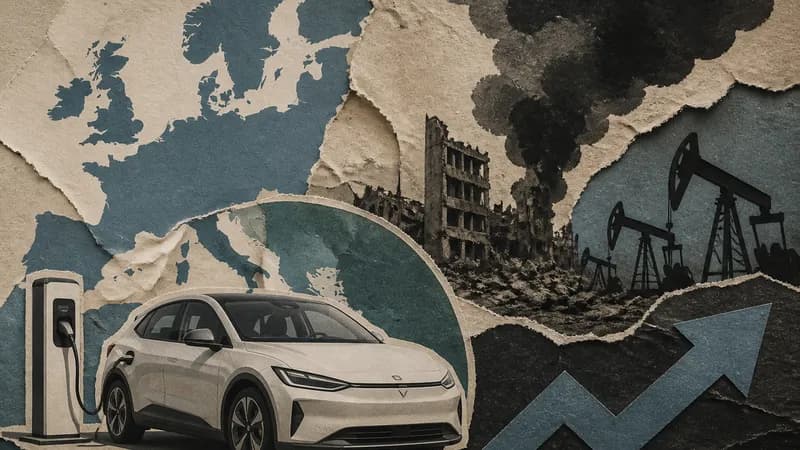
Demand for electric vehicles in Europe has surged as high fuel prices linked to the Iran war propel sales of new and used EVs, data shows.
This provides a much-needed boost to the auto industry, which had faced lower-than-expected EV adoption.
Sales of fully electric cars grew 30% in 2025, but carmakers like Volkswagen and Stellantis booked multi-billion-dollar charges due to asset writedowns.
International oil prices jumped above $100 a barrel after U.S. and Israeli airstrikes on Iran at the end of February, causing energy supply disruption.
"This isn't a blip, it's an inflection point," said Gurjeet Grewal, CEO of Octopus Electric Vehicles, which saw a 95% rise in new EV demand and 160% in used EVs in April.
Britain, as a net energy importer, has been particularly exposed to inflation and food price increases.
Data from New Automotive and E-Mobility Europe showed new EV registrations rose 34% year-on-year in April across 16 markets, covering over 80% of EU and EFTA car sales.
Strong EV growth was seen in Denmark, the Netherlands, and even Italy, where EVs had been slow to take off.
Volvo's Chief Commercial Officer Erik Severinson said orders have risen, especially for the entry-level EX30 electric SUV.
Renault said 50% of its UK registrations in April were EVs, with EV inquiries up 48% since the Iran war began. The company is working to raise production.
Seat/Cupra CEO Markus Haupt reported that EVs made up nearly 60% of orders in Germany, well above their quota of 25%.
Chinese brands like BYD have seen a surge in interest due to affordable models. Carwow reported a 25,000% increase in BYD inquiries in Q1.
OLX said customer inquiries for EVs on its French website were up 80% since the war began.
Industry players believe this time could be different, as the conflict has fundamentally reshaped thinking about energy security.