


Calculations we conducted in 2022 showed that the load level on some routes was 110-115%. Currently, this figure has dropped to about 90%. Our main goal is to reduce passenger density to 70%, which is considered the "psychological comfort threshold" in international practice.
Oxu.Az reports that this was stated by Anar Rzayev, chairman of the Board of the Azerbaijan Land Transport Agency (AYNA) under the Ministry of Digital Development and Transport, in an interview with "Report".
The agency head highlighted the results of the mobility program implemented since 2022 with numbers:
Number of buses: The number of buses on the line, which was 1,720 in 2022, has now reached 2,350.
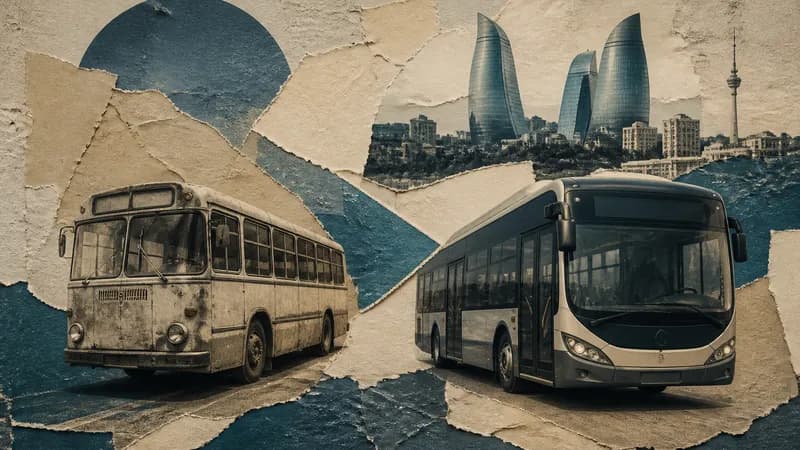
Quality change: The number of modern buses has increased from 550 to 1,100.
Old vehicles: About 1,000 old buses are still operating in the capital, and their phased replacement continues.
Anar Rzayev emphasized that for optimal operation of public transport in Baku, a total of 2,800-2,900 buses are needed:
"According to the plan, by 2030 we will increase the number of buses on the line to 2,800. This means bringing about 1,500 new buses to the city in the coming years, which is reflected in the state program."
Noting that maintaining intervals directly depends on traffic conditions, the AYNA chairman touched on the importance of bus lanes:
"Thanks to the bus lane network, the average speed of vehicles has increased from 17 km/h to 21-22 km/h. This increase has a positive effect on maintaining intervals. Passengers can now track bus movements in real-time via GPS using the "AYNA MaaS" application."
Finally, addressing drivers, Anar Rzayev cited the city of Ganja as an example. He noted that when other vehicles do not obstruct buses, intervals are maintained more stably.


